Posts tonen met het label Trends 2009. Alle posts tonen

vrijdag 13 november 2009

Which Christmas trends are hot?

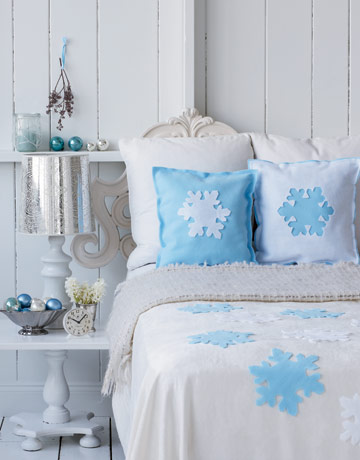
As announced at the Christmasworldfair 2009, held every year in Frankfurt at the end of january, the trend for Christmas 2009-2010 is “Express your dreams”. It is declined in 4 decorating trends: Airy, Sweet, Comfort and Obsession. Each trend also represents a season. So feel free to be inspired by the Comfort decor theme to decorate at Thanksgiving.

Airy (spring) is characterized by lightness and transparency. It feels romantic in a modern way. Soft pastel colours, blurred motifs and fluid structures lure the observer into a fairylike fantasy world. Plenty of glass vases, baubles and crystal are a must.
The colour parameters are created by chalky pastels ranging from cream to pink and pale grey, all combined with lots of white. Transparent, translucent materials are as light as the colors.
Sweet (summer) is the most feminine decor. It is unusual to see pink floral patterns at Christmas. Do not be afraid to use a multicolor palette. This decor feels fresh and girly with a hint of kitsch. The milky palette extends from sand, aqua and turquoise to violet, lime and slate grey. Materials include plastic, varnish and porcelain, tulle and satin ribbons. Surface are over-sugared, candied and glazed.
Comfort(Autumn) is an evolution of the birch bark, the deer and the natural theme that was popular on the last two years. Comfort plays with contrasts in textures, materials and styles. Make sure to include pieces made with natural materials. Feel free to oppose modern style objects with driftwood. A must are the touches of red or orange to enliven the decor.

Obsession (winter) this is by far the most glamourous decor for Christmas. You mix metallic colors. Quartz pink and mauve lighten up mahogany, aubergine, violet and gold. You will need to look for curved lines, ornate objects, luxurious materials and fabrics like velvet and silk to reproduce the Obsession look.
At this point it seems that the trend that is being picked up the most, is airy in combination with fresh blue tones.
But personally I really like SWEET ....

donderdag 12 november 2009

Flamant Home Interiors: impressions winter 2009

Each time I visit Antwerp I just can't leave the city without visiting my favourite Flamant store. Every time their collection just inspires me. That's why I wanted to show you an impression of Flamant's new winter 2009 collection.

maandag 18 mei 2009

Blog vs Tweet

@ http://thefuturebuzz.com/ I just read an article by Adam Singer, which I wanted to share with you, cause I believe he's right. In my opinion there are advantages and disadvantages to both types of media. There are some pretty obvious ones for blogs:
* they require more time/effort.
* they provide more info.
* they are most likely not going anywhere, while Twitter may be hot right now, but who knows where it will be in the future?
* the more blog readers you have, the more times your posts are likely to be linked to on Twitter anyway.

There are obvious benefits to having Twitter followers too though, particularly for marketers.
* more followers is a good indication that there is demand for what you offer as a business, and that people are interested in your product(s).
* relationships easier to form


The 19 reasons, by Adam Singer, why you should blog and not just tweet:

Twitter is popular because it is easy. It is easy to setup, easy to copy-paste links into, and easy to write 140 character bits. But, having your own blog remains the strongest platform if you’re serious about sharing ideas and having a continued dialog with the world. Blogging is the antithesis of easy, however it is far more rewarding.
I’m not saying Twitter isn’t a useful and interesting service, because it certainly is. But it does not negate the real opportunity that is actually made more useful by the popularity of microblogging: having your own blog.

Are you just using Twitter but not blogging? You’re missing out. Here’s why you should make a blog your home base and consider Twitter an outpost:
1. Blogging demonstrates true commitment and passion to your industry that you really can’t fake long-term. Most won’t be able to sustain it over long periods of time with frequency, but those who do so are rewarded in spades and stand out from the crowd.
2. Old articles are valuable and still read years later, given infinite life by the engines. Old Tweets live in archive purgatory where a majority will never be seen again.
3. Remember, you’re essentially contributing to someone else’s network on Twitter - certainly there are returns, but make no mistake they profit from your attention. I know you might not have a problem with that because you gain something too, but it’s good to be conscious of that fact.
4. A compelling link in a blog entry will be clicked; links in Twitter are noise that in aggregate make up signal, but the reality is links in your stream aren’t the same as a post with a compelling link.
5. Secret everyone knows: most of Twitter is just linking to blogs and content on the open web. Being the end product people are actually interested in and focus their attention on is where your ideas will be studied carefully, not in the cacophony of Twitter.
6. You own your work in a self-hosted blog and are in total control over how it is presented.
7. Twitter is in a sense social sticky notes, or the SMS of the Internet (however you want to consider it). It’s snack-sized content. Are you or your business interesting enough to provide the full course? It’s telling who engages deeper vs. those who simply choose to engage 140 characters at a time.
8. Cumulative results over time from blogging, each post incrementally adds value to your site as a whole. Not necessarily true on Twitter.
9. Full analytics with a blog.
10. Multiple touch points to readership and interaction (email, RSS, on-site, etc.).
11. Plugins let you add pretty much anything you want, can even integrate microblogging within your blog itself.
12. Flexibility with layout.
13. 140 characters is often more than necessary - but also it is often less than necessary.
14. Everyone on Twitter is looking for the next big thing or most interesting piece of content to link to. Wouldn’t you rather be the big thing than merely another person pointing at it?
15. These are all just tools to share content and ideas, no more, no less. You need a cohesive strategy for all of them to drive conversions in one spot. A blog is the perfect place for that if you want focused attention and to build an interested community. What if any one network you don’t control falls out of favor or changes the rules? At the end of the day, self-hosted blog owners control the vertical and the horizontal, whereas on Twitter or any external network you’re at the whim of someone else.
16. I don’t even know why some people consider for a second that Twitter and FriendFeed will kill blogging, these ideas are pure linkbait and show a lack of understanding of the motivation of people on the open web.
17. Careful of how much time you devote to Twitter instead of contributing to your own channel. Spend the most time nurturing that - time spent in Twitter comes at the opportunity cost of fresh content to your blog. You can use Twitter and other micro networks to draw subscribers and interest, but the premier value is in working on your own material in a unique space.
18. RSS is alive and well - Steve Gillmor and the TC gang know how to write a great piece of linkbait, but that’s pretty much all it is. Remember, they are in the business of generating buzz, links and pageviews through opinion pieces that ruffle the feathers of tech bloggers, and they’re good at it. It’s entertainment value but I wouldn’t put too much stake in anything one person or site says, always look at the situation and landscape objectively.
19. You are in control of when your blog goes into maintenance mode - not so with Twitter or really any free service.
Don’t get me wrong, I do like Twitter. I’ve even taken the time to draft insights from using it as I think it’s a great service, however the biggest opportunity is still to develop a successful self-hosted blog. This advice isn’t new - but I just got the feeling this week that it needs to be restated. I know it’s not as “sexy” anymore but it is still far more valuable and should not be discounted merely because the early adopters have shiny new object syndrome.

Further reading to help push your blogging to the next level:
How To Successfully Integrate Blogging Into Your Busy Life
A Path To Rapid Growth: Find Your Formula
Make Your Site Known For Signal, Kill The Noise

donderdag 7 mei 2009

The power of brands

Every year the survay by Millward Brown is very interesting to read, to find out who's hot and who's not anymore :)

To view the entire 100 go to
http://www.marketingmagazine.co.uk/news/wide/901385/ or check out the following report from http://adage.com :

One thing this recession hasn't knocked out is the power of brands.

Despite the pounding global business is taking, the $2 trillion value of the top 100 brands has held steady, according to Millward Brown's annual BrandZ report. "Consumers are blaming companies and leaders for the current troubles, not the brands," said Joanna Seddon, exec VP at Millward Brown, the WPP-owned research company. "Brands are emotional bonds created with consumers, and overall, brands have sustained value."

Google continued its reign as the world's most powerful brand, followed by Microsoft, Coca-Cola, IBM, McDonald's and Apple. Among the top 10 brands, General Electric lost the most ground, falling six places to No. 8, and Vodafone cracked the top 10, ending up at No. 9.

All told, the value of the top 100 brands, which ranges from the ubiquitous search engine at the top to Lowes at the bottom, was about $2 trillion and didn't suffer the decline one might expect in a recessionary environment.

There was, however, more volatility in the top 100 this year than in the past, with 15 brands dropping out. They were mostly car brands, such as Chevrolet, Ford and Volkswagen, and financial ones such as AXA, AIG and, of course, Merrill Lynch and Wachovia. They were replaced by brands such as Nintendo and Pampers.

Pampers gets serious
Pampers made its debut as the 31st-most-powerful brand by taking up a higher-minded positioning with its consumers. Once merely associated with stopping leaks, it's evolved into a brand that helps mothers. Nintendo, which came in at 32, has been associated with taking video games from teenage boys' bedrooms and making them a living-room fixture that can be enjoyed by a broader segment of consumers.

Brand value was determined by a set of calculations that includes a distillation of the earnings represented by that bond with consumers, as opposed to those created by price or other functional considerations.

One important trend this year is that both luxury brands and value brands performed well. The top 15 as ranked by brand contribution is a mix of luxury products, thanks in part to successes in Asia, and relatively inexpensive consumer goods. The list is topped by Moet, Porsche and Hennessy, but that upmarket trio gives way to Douwe Egberts, Tide, Gillette, Wrigley, Pampers and Skol.

But the squeeze was put on the brands that don't fall into either category, Ms. Seddon said, including mass-luxury brands such as Ralph Lauren, whose value plunged 20%, or Starbucks, whose storefront brand lost 43% of its value. (Its supermarket brand grew 2%, however.)

The categories that suffered most were insurance companies and automakers -- all brands in each category declined. The financial-institution category avoided that fate thanks to a few success stories, including China Merchant Bank, the top riser in this year's study. Bank of America and Citi dropped from the top of the financial list, now dominated by banks that are either headquartered in or have strong presences in emerging markets.

In the soft-drink category, Coke dominated Pepsi. Coke's brand value grew 16%, while Diet Coke grew 12%. Meanwhile, both Pepsi and Diet Pepsi declined in value. The beer category was dominated by Anheuser-Busch InBev. Bud Light was the largest brand, followed by Budweiser, and Stella Artois came in fourth behind Heineken. Miller Lite came in seventh, growing only 2% compared with double-digit growth for the A-B InBev brands.

zondag 26 april 2009

Food Mapping

For those of you that don't know what food mapping is, it is the creative act of locating your own healthy, local and sustainable food sources. I just found a great, especially when living in the city, food mapping container. The food map container is an edible garden. Great to grow your ow herbs and vegetables and easy to move around. http://www.foodmapdesign.com/

woensdag 11 februari 2009

Spring flowers 2009

The Dutch Flower Council just announced the spring 2009 trends for flowers, the theme is "Participate to Create".
The following colors are hot right now:

And some more impressions of this theme:


woensdag 28 januari 2009

Marketing trends 2009

Anderson Analytics researched for MENG (Marketing Executives Networking Group) the importance of various marketing trends among MENG members – What was hot in 2008 and is not in 2009. It is an interesting report to read, especially when keeping in mind the current Global recession and see how marketers expect to act.
The 5 most important trends:
  1. Insights and innovation. The most important strategy the marketing executive wants to use in times of recession. 72% of executives say that will do the same kind of effort in innovation and over three quarters of executives say R&D and use of Market Research will either stay the same or increase.
  2. Customer first. “Customer Satisfaction”& “Customer Retention” remain the marketing concepts which are most interesting and relevant to majority of marketing executives. Followed by: Marketing ROI, Brand Loyalty, Segmentation, Quality, SEO, Competitive Intelligence, and Data Mining
  3. Green is less important. Global warming drops with 14 places in the list. Green marketing, Alternative Energy score less than last year.
  4. Marketing executives have had it with Web 2.0. The number of marketing executives that say they are a tired of hearing “Web 2.0”and other Web 2.0 related buzzwords such as “blogs” and “social networking” has doubled opposed to 2008. At the same time they state that they don’t know enough about these subjects. In November 2008 67% of the respondents thought of himself as a beginner when it concerns Web 2.0 related subjects.
  5. China the greatest foreign opportunity. 53% of the marketers that work abroad see the most potential in China. India follows in second place with 17% of the votes. Boomers represent the most important demographic. However, the perceived importance of Generation X and Y grew significantly compared to last year
Best books to read, according to the respondents: Good to Great, Groundswell, Hot Flat and Crowded, The Black Swan, Predictably Irrational, Mavericks at Work, The New Rules of Marketing and PR, The Art of the Start, Purple Cow, Go Put Your Strengths to Work en Our Iceberg is Melting.
Seth Godin remains the favourite marketing/business guru this year as well. Warren Buffet and Malcom Gladwell now occupy second and third place, respectively.
If you want to read the full report, including Respondents Demographics, please visit: http://www.andersonanalytics.com

zaterdag 10 januari 2009

A luxurious 2009


Every month I receive a newsletter from http://trendwatching.com/, the name says it all it's a consumer trend watching company. In their latest newsletter they asked the following question: The Future of Luxury. How will luxury brands fare this year? What will define luxury over the next few years?
With a global financial crisis going on... we still need to indulge ourselves sometime in a bit of luxury it may not be the "over the top"bling bling anymore and maybe it will be a bit more modest?
I think that especially in these times we all need a bit of luxury to feel good and it may be that you find luxury in material things or maybe it is the luxury we find in some extra time to enjoy the things we already have. This was also what they said in the newsletter: ‘luxury will be whatever you want it to be’. After all, what constitutes luxury is closely related to what constitutes scarcity. More than ever, scarcity is in the eye of the beholder, especially those beholders who are desperately trying to be unique.
Related Posts